Marine reptiles / Ichthyosaurs
Shastasaurus
Marine reptile Late Triassic
Shastasaurus was an ichthyosaur, a marine reptile that lived in the Late Triassic, 237 to 211 million years ago. It was not a dinosaur.
- Lived
- 237 to 211 million years ago
- Fossil finds
- 10

Life restoration
What Shastasaurus may have looked like
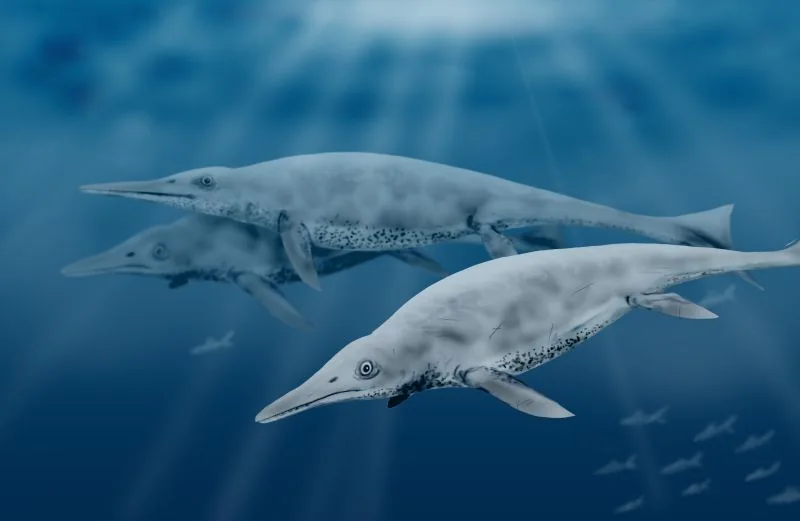
An artist's restoration from the fossils. Colour, skin and other soft parts are informed guesses. Shastasaurus by Nobu Tamura, Wikimedia Commons, CC BY 3.0.
Name
Name and family
The genus was named by Merriam in 1895.
The Paleobiology Database lists 4 species: Shastasaurus alexandrae, Shastasaurus careyi, Shastasaurus pacificus and Shastasaurus sikkaniensis.
It is classed as a carnivore, a diet the database records for Ichthyosauria as a whole.
It is one of 87 ichthyosaurs in the Paleobiology Database.
Family tree
- Ichthyosauriformes
- Ichthyopterygia
- Eoichthyosauria
- Ichthyosauria
- Hueneosauria
- Merriamosauria
- Shastasauridae
- Shastasaurus
Fossils
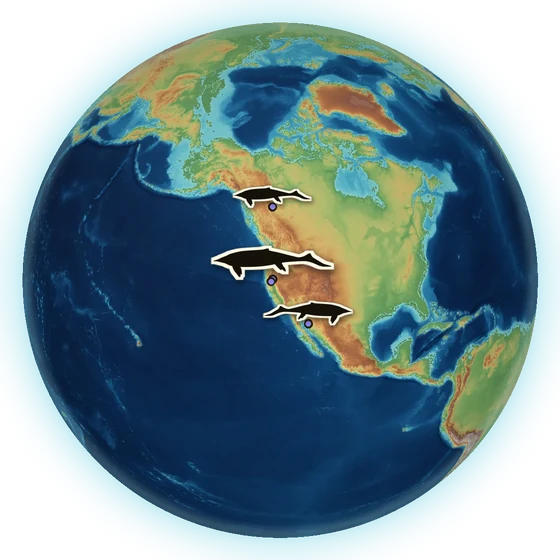
Where Shastasaurus has been found
10 fossil finds of Shastasaurus are recorded, in the United States, Mexico and Canada.
Most come from the United States (7 of 10).
In the United States it has been found in California and Oregon.
The finds come from 5 rock formations, most often the Hosselkus Formation (5).
When Shastasaurus lived, these sites lay near 14 degrees north; today they are near 41 degrees north.
On the atlas's maps its finds appear at 230 and 220 million years ago.
| Place | Finds | |
|---|---|---|
| United States | 7 | |
| Mexico | 2 | |
| Canada | 1 |
Neighbours
Its world
Its closest relative in this atlas is Shonisaurus.
Found in the same rocks
 Nothosaurus
Closest relatives
 Shonisaurus

Sources
Fossil records were read from the Paleobiology Database on 2026-11-16. Shastasaurus in the Paleobiology Database (CC0).
Ancient map: Scotese and Wright 2018, PALEOMAP PaleoDEMs, doi:10.5281/zenodo.5460860, CC BY 4.0, redrawn as shaded relief.
Life restoration: Shastasaurus by Nobu Tamura, Wikimedia Commons, CC BY 3.0.
Outline: Shastasaurus sikanniensis by Gareth Monger, PhyloPic, CC BY 3.0.